


Benign Prostate Enlargement
Benign prostate enlargement may cause complaints such as difficulty urinating, frequent urination, and waking up at night to urinate.
Prostat Merkezi
Rezum is a minimally invasive treatment method that aims to reduce urinary complaints caused by benign prostate enlargement. Complaints such as weak urine flow, frequent urination, and waking up at night may make daily life more difficult over time. The Rezum procedure focuses on reducing the pressure that the prostate places on the urinary channel, and the recovery process progresses gradually. In suitable patients, it may contribute to easier urination and improved quality of life.
Rezum is a minimally invasive treatment approach aimed at reducing urinary complaints caused by BPH, known as benign prostate enlargement. The goal of this method is to relieve urine flow by reducing the pressure that enlarged prostate tissue places on the urinary channel. The basic principle of the Rezum procedure is that water vapor energy delivered in a controlled manner into the prostate tissue gradually reduces tissue volume in the targeted area over time. In this way, the obstruction that makes urination difficult is reduced, and marked relief may be seen in complaints that affect the patient’s daily life.
In urology practice, Rezum attracts attention because it is among the options that can be performed with less intervention compared with surgery. The procedure is generally carried out endoscopically, meaning with a device advanced through the urinary channel. During the application, the areas of the prostate that narrow the urinary channel are targeted, and short bursts of vapor are delivered to these areas. After Rezum, the body’s natural healing process begins; as the treated tissue shrinks over time, the passage through the urinary channel widens. Although this process may vary from person to person, gradual improvement is expected in most patients.
One of the most important points regarding Rezum is that treatment planning must be made by taking into account the patient’s level of symptoms, the anatomical features of the prostate, current health status, and expectations. Since benign prostate enlargement does not progress in the same way in every patient, the decision for Rezum is not based on a single criterion. For this reason, examination, urine flow testing, prostate volume assessment, necessary tests such as PSA, and imaging methods are important in determining the roadmap before Rezum.
After the Rezum procedure, some patients may need a catheter for a short period. The reason is that swelling in the tissue after the procedure may temporarily make urine flow more difficult. Over time, this swelling subsides and the relief targeted with Rezum becomes more apparent. The nature of the patient’s complaints may also affect the speed of recovery; for example, improvement in symptoms such as waking up frequently at night to urinate, urgency, interrupted urination, and weak flow usually follows a gradual course.
Rezum is mostly considered in patients with lower urinary tract symptoms caused by benign prostate enlargement. Symptoms such as frequent urination, sudden urgency, weak urine flow, difficulty starting urination, interrupted urination, waking up at night to urinate, and a feeling of incomplete emptying are common manifestations of BPH. When these complaints significantly affect quality of life and an adequate response cannot be achieved with medical treatment, Rezum may come to the agenda as an option.
The suitability assessment for Rezum is not limited only to the presence of symptoms. Factors such as prostate volume, which part of the enlargement affects the urinary channel most, and bladder function are important. In some patients, enlargement of a certain part of the prostate may narrow the urinary channel more significantly.
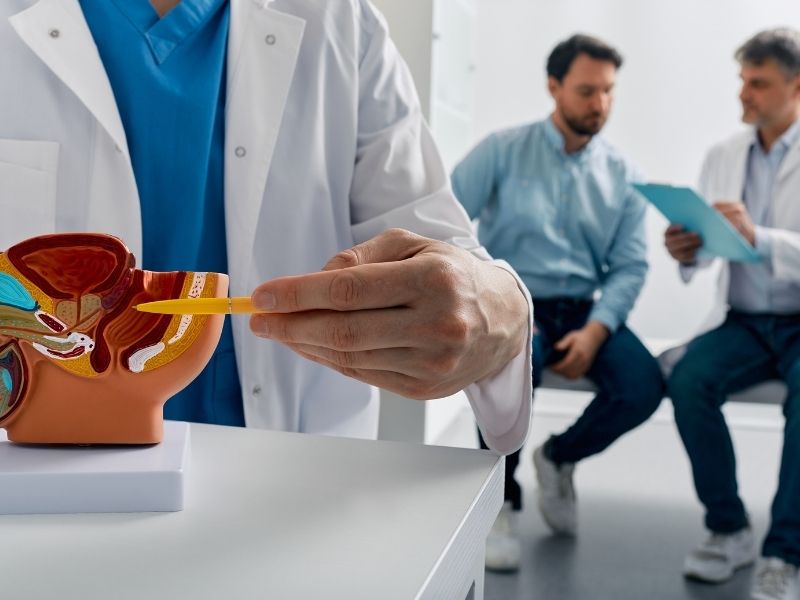
Based on the examination and necessary tests, the urology specialist evaluates whether the Rezum procedure is anatomically appropriate. In addition, factors such as the medications used by the patient, blood thinner therapy, accompanying cardiovascular diseases, or neurological problems are also taken into account in Rezum planning.
Rezum generally stands out in patients seeking an alternative to surgery, aiming to return to daily life in a shorter time, and preferring minimally invasive methods. However, not every BPH patient is an ideal candidate for Rezum. For example, in situations such as severe obstruction with inability to urinate, recurrent urinary tract infections, significant bladder stones, signs of obstruction affecting kidney function, or suspicion of prostate cancer, the approach may differ. In such scenarios, other treatment options may be considered instead of Rezum, or the underlying risks may need to be clarified first.
The patient’s expectations are also important in the evaluation of Rezum. Some patients want to avoid long-term medication use, while others may be concerned about the risks or recovery process of surgery. Rezum may offer a good balance for this group of patients; however, the expected benefit from the procedure is still directly related to the type and severity of the patient’s complaints. For this reason, the decision for Rezum should be made after an individualized urological evaluation.

Because Rezum is a minimally invasive method, it offers attractive advantages for many patients. First of all, the Rezum procedure can generally be planned as an approach that does not require a long hospital stay. This creates the potential to shorten the time needed to return to work and social life. In addition, because Rezum aims to reduce the obstruction in the urinary channel by targeting prostate tissue, it may provide marked improvement in complaints such as weak urine flow and a feeling of incomplete emptying.
Another advantage of Rezum treatment is that it can be applied with a lower procedural burden compared with surgical interventions in selected patient groups. Since it is performed endoscopically through the urinary channel, no skin incision is made. This may reduce procedural anxiety in many patients. Because the recovery process after Rezum progresses gradually, some patients experience increasing relief over time. Improvement may especially be seen in complaints such as frequent urination and waking up at night, which negatively affect daily life.
The issue of sexual functions is also one of the topics patients are most curious about in BPH treatments. When appropriate patient selection is made, Rezum is considered one of the options with higher expectations for preserving sexual functions. Still, as with every medical procedure, it should not be forgotten that there may be differences from person to person. It is important for the urology specialist to clearly discuss the possible effects and realistic expectations with the patient before Rezum.
Another practical point related to Rezum is that it can create an intermediate solution area for patients who cannot achieve sufficient relief with medication treatments but want to avoid major surgeries. Some patients use medications such as alpha blockers or 5-alpha reductase inhibitors for years, but seek different options because of side effects or insufficient benefit. Rezum is one of the methods that can be evaluated during this transition. In addition, because Rezum focuses the target of treatment on reducing the obstruction in prostate tissue, it directly addresses the mechanism causing the patient’s complaints.
Of course, Rezum is not a miracle solution, and every method has its limitations. Short-term burning, frequent urination, mild bleeding in the urine, or temporary irritative complaints may be seen after the procedure. Some patients may require a catheter for a short period. However, with proper follow-up and adherence to the physician’s recommendations, this process can usually be managed. In patients scheduled for Rezum, fluid intake, follow-up examinations, and monitoring of possible complaints in the post-procedure period are important for the quality of the result to be obtained.
Benign prostate enlargement may cause complaints such as difficulty urinating, frequent urination, and waking up at night to urinate.

Prostate cancer is a disease that develops in the prostate gland and is evaluated through PSA testing, examination, biopsy, and imaging meth...

HoLEP and ThuFLEP are closed laser surgical methods used to reduce urinary complaints in benign prostate enlargement.
You can quickly search HoLEP, ThuFLEP, prostate fusion biopsy, robotic surgery and other topics.