

Prostate Screening Tests
Prostate health is an important issue that requires regular follow-up, especially with advancing age. Complaints such as difficulty urinatin...
Prostat Merkezi
What is PSA is one of the common key topics in the evaluation of prostate health. The PSA test measures the level of a prostate-derived protein in the blood and is interpreted together with other findings, not alone, during the prostate diagnosis process. High PSA may be an important warning for prostate cancer screening, but it does not always mean cancer. PSA may also increase due to prostate enlargement, inflammation, age, and some temporary conditions.
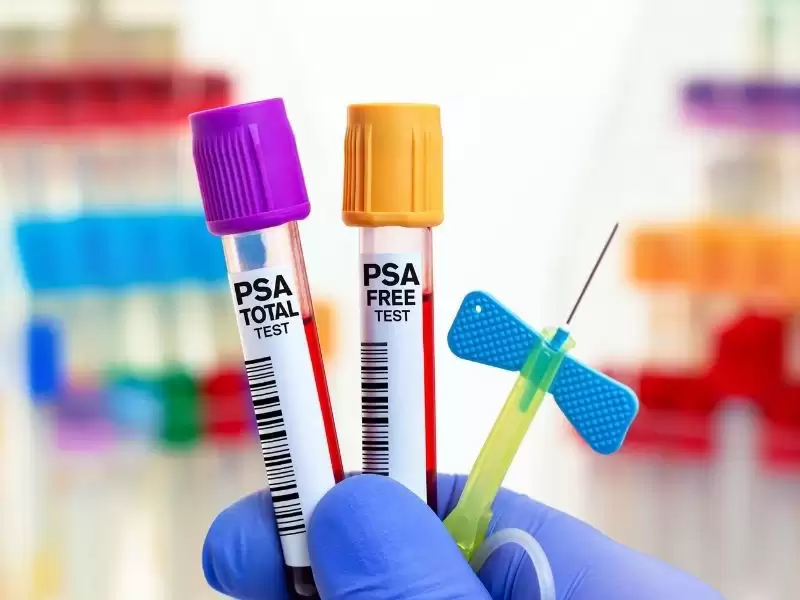
PSA is a protein produced by the prostate gland and stands for prostate-specific antigen. The phrase what does PSA mean is especially searched by people who see this value in their blood test results. Prostate-specific antigen (PSA) total value shows the total amount of PSA measured in the blood and is one of the parameters frequently used in urological evaluation.
The answer to the question what is PSA value is not based only on the number; it is evaluated together with the person’s age, prostate volume, symptoms, family history, and examination findings. Different measurements such as total PSA and free PSA may provide more detailed information about prostate diseases.
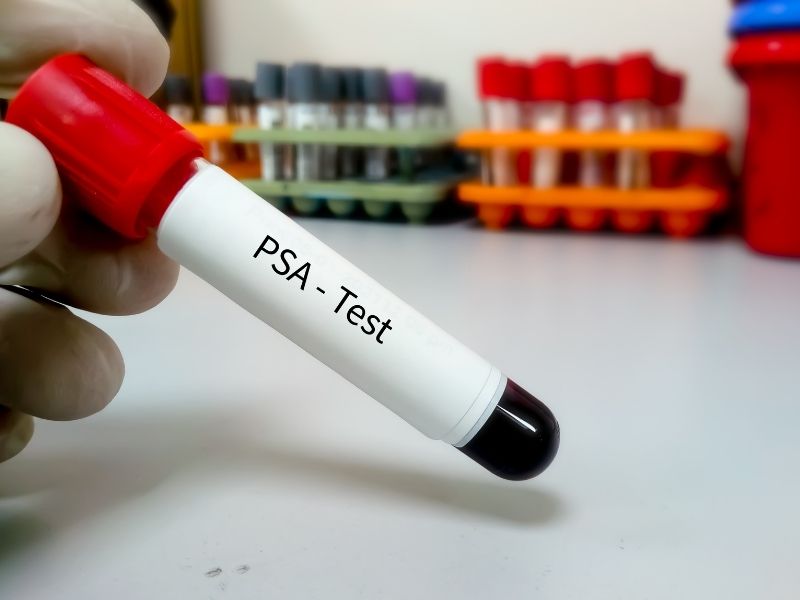
PSA result may provide important information about prostate health, but it is not a definitive diagnostic tool on its own. For the value to be interpreted correctly, the patient’s age, prostate volume, symptoms, family history, prostate examination, and previous test results should be evaluated together.
The PSA test may be performed for prostate cancer screening, follow-up of prostate enlargement, suspicion of prostate inflammation, and monitoring in patients who have previously received treatment. The phrase what is a PSA test can briefly be explained as a laboratory examination performed with a blood sample taken from a vein that measures the level of prostate-derived antigen.
How the PSA test is performed is also important for patients. Blood is usually taken from the arm for the test, and although no special preparation is generally required, some conditions may affect the result. Therefore, having the test at the time and under the conditions recommended by the urology specialist provides a more accurate evaluation.
PSA value may indicate activity in prostate tissue, but the cause of this activity cannot be confirmed by the test result alone. The normal PSA value generally varies according to age, and it is not correct to interpret every patient with the same limits. In evaluating what PSA should be, age, prostate volume, and previous PSA results are reviewed together.
Giving a single definite limit for what PSA value should be may be misleading. Some people may have risk even with low PSA values, while higher values in some people may be due to benign causes. Therefore, although PSA value ranges may give an idea, they do not replace specialist evaluation.
High PSA may occur due to different causes such as prostate tissue enlargement, inflammation, irritation, infection, or suspicion of cancer. Therefore, the question why does PSA rise should not be limited only to prostate cancer. Recent urinary tract infection, prostate massage, ejaculation, cycling, or some interventional procedures may also cause temporary elevation.
The evaluation of what PSA level is dangerous varies from patient to patient. In general, further examination may be needed at high values, but a definitive diagnosis is not made with a single result. Evaluation together with additional parameters such as the rate of increase in PSA over time, what total PSA is, and what free PSA is becomes more meaningful.

When high PSA is detected, a urology specialist should be consulted without panic. Because a high PSA result does not always mean prostate cancer; however, a detailed evaluation is required to understand the underlying cause correctly.
High PSA does not always mean prostate cancer. Benign prostate enlargement, prostate inflammation, and age-related changes may also increase PSA levels. Therefore, when a high PSA result is seen, a detailed evaluation should be performed by a urology specialist without panic.
Prostate cancer symptoms may not appear in every patient at an early stage. Therefore, PSA result may be important for early evaluation in some people even without symptoms. However, PSA alone does not diagnose; the process is clarified with examination, imaging, and biopsy when necessary.
The PSA test may generally be recommended after a certain age to evaluate prostate health. In people with a family history of prostate cancer, difficulty urinating, frequent urination, or prostate-related symptoms, the test may be considered earlier.
Risk assessment should be personalized. When planning prostate cancer screening, the patient’s age, general health condition, family history, and expectations are considered together. In this way, unnecessary procedures are avoided while important risks are not missed.
Before the PSA test, conditions that may affect the result should be reported to the urology specialist. Recent urinary tract infection, catheter placement, a prostate-related procedure, or some physical activities may temporarily change the PSA level.
Before the test, it may be necessary to avoid factors such as ejaculation, heavy exercise, or prolonged cycling for a short period. These details help the test result to be interpreted more accurately and may prevent unnecessary concerns.
PSA test and prostate examination provide more comprehensive information when evaluated together. During prostate examination, the size, consistency, and suspicious hard areas of the prostate may be assessed. Even if the PSA result is normal, examination findings may require further evaluation in some cases.
In the prostate diagnosis process, looking only at the blood value is not sufficient. PSA, examination, patient history, and imaging results are evaluated together to determine the risk level. This approach both reduces unnecessary interventions and supports early detection of important findings.
If high PSA persists, if there is a rapid increase in values, or if a suspicious finding is detected during examination, prostate MRI may be considered. MRI helps examine suspicious areas in prostate tissue in more detail and may support the biopsy decision.
Prostate biopsy is one of the diagnostic methods used to confirm or exclude suspicion of cancer. Biopsy does not need to be performed immediately in every high PSA case; the decision is made by evaluating PSA level, free PSA ratio, MRI findings, age, and risk factors together.
PSA follow-up may provide more valuable information than a single measurement. The change in the value over time, whether there is a sudden increase, and its relationship with previous results are guiding for prostate cancer screening. Therefore, regular follow-up is especially important for people in the risk group.
In the follow-up process, the aim is not only to see a high PSA value but to correctly understand the reason for this elevation. When necessary, the diagnosis process proceeds more reliably with repeat testing, prostate examination, MRI, or biopsy.
For patients looking for an Ankara prostate center, high PSA evaluation should be performed personally by a urology specialist. Since each patient’s age, symptoms, family history, prostate volume, and previous test results are different, a detailed evaluation is required instead of a standard approach.
PSA follow-up is important for monitoring prostate health and correctly managing suspicion of prostate cancer. In patients presenting due to high PSA in Ankara, the aim is to reach the correct diagnosis without creating unnecessary anxiety and to plan the further examination process when necessary.
The PSA test is an important aid in prostate cancer screening and prostate health evaluation; however, it does not diagnose on its own. Urology specialist evaluation is required for the result to be interpreted correctly.
PSA result may change temporarily due to some short-term factors. Ejaculation, infection, cycling, or prostate-related procedures may affect PSA value.
Free PSA ratio helps interpret prostate cancer risk when evaluated together with total PSA. This ratio does not diagnose on its own; it gains meaning together with prostate examination and other findings.
If the PSA result is high, repeating the test under appropriate conditions may be requested in some patients. Repeat testing helps distinguish temporary PSA elevation from persistent elevation.
Urinary tract infection and prostate inflammation may temporarily increase PSA value. Therefore, if infection is suspected, the PSA test may be re-evaluated after treatment.
PSA follow-up is planned according to the person’s age, risk status, previous PSA result, and prostate health. The urology specialist determines the appropriate follow-up interval for prostate cancer screening individually.
Low PSA value may reduce the risk of prostate cancer, but it does not completely rule it out. Additional evaluation may be needed if there are prostate cancer symptoms, family history, or suspicious examination findings.
Prostate enlargement may cause the PSA result to be high. In this case, PSA value is interpreted together with prostate volume, age, prostate examination, and imaging results when necessary.
Prostate health is an important issue that requires regular follow-up, especially with advancing age. Complaints such as difficulty urinatin...
You can quickly search HoLEP, ThuFLEP, prostate fusion biopsy, robotic surgery and other topics.