


Prostate and Sexual Health
Prostate and sexual health can affect erection, sexual intercourse, prostate surgery, and the process of having children.
Prostat Merkezi
What is the prostate is a question that often comes up especially among men who notice changes in their urination pattern or want to learn about routine check-up planning. The prostate is a small gland located below the bladder and surrounding the urinary canal. While it produces secretions for the reproductive system, its location also means it can affect the flow of urine. Understanding the structure and function of the prostate is important for interpreting possible symptoms correctly and seeking a urological evaluation at the right time.
What is the prostate is often the starting point for many people who want to understand one of the basic parts of the male reproductive system. The prostate is a small gland located just below the bladder and surrounding the urinary canal (urethra) like a ring. Because of its anatomical location, it is closely related both to the urination process and to the formation of semen. For those wondering what the prostate is, the clearest definition is that it is a gland within the reproductive system that produces secretions, but because of its location, it can also affect the urinary canal.
The shape of the prostate is often compared to a chestnut, and its size may vary with age. In young adulthood, the gland tissue is smaller, but as age advances, it may tend to enlarge under the influence of hormones. This enlargement does not always mean disease; however, what makes the question what is the prostate clinically important is that changes such as enlargement or inflammation in the prostate tissue may affect the urinary canal. Since the urethra passes through the prostate, an increase in gland volume may show itself through complaints such as weakened urine flow, frequent urination, or a feeling of incomplete emptying.
When answering the question what is the prostate from an anatomical perspective, it should also be noted that the prostate is an organ surrounded by a capsule and contains different zones. In clinical evaluation, especially the “transition zone” and the peripheral zone stand out; because benign prostate enlargement usually originates from the transition zone, while prostate cancer tends to develop more often in the peripheral zone. This distinction is an important anatomical detail that affects the examination and evaluation approach.
One of the most common follow-up questions after asking what the prostate is concerns who has a prostate. The prostate is a gland biologically belonging to the male reproductive system and is found in individuals born with male anatomy. During childhood, prostate tissue is small and relatively inactive, but after puberty it becomes more prominent under the influence of hormones. For this reason, the answers to the questions what is the prostate and when does the prostate become important usually take shape after puberty.
Since enlargement of the prostate gland is seen more frequently at older ages, the question what is the prostate becomes more common especially in men over the age of 40. However, this does not mean that every man will necessarily experience significant prostate-related complaints. In some individuals, the size of the prostate may increase without causing symptoms, while in others, even smaller changes may affect the urinary canal.

The factors that make the question what is the prostate personal include age, genetic predisposition, lifestyle, accompanying diseases, and hormone levels.
It is also often asked whether women have a prostate. In biological female anatomy, there is no prostate gland; however, some glandular tissues located around the urethra in women are defined as paraurethral glands and may show secretory features similar to the prostate. Still, in clinical use, when people refer to the prostate, they mean the prostate gland found in men.
One of the most basic answers to the question what is the prostate is that the prostate is a gland that produces secretions. When asked what the function of the prostate is, the main role can be summarized as producing a fluid that contributes to the content of semen. Prostate fluid contains components that affect the fluidity of semen and may help sperm cells be transported and remain in a suitable environment. In this way, sperm cells can move more easily during ejaculation and the reproductive process is supported.
When we address the question what is the prostate through its function, it is necessary to underline its relationship with both the reproductive and urinary systems. Because the prostate surrounds the urinary canal, changes in its tissue may affect not only reproduction but also urination. To a person asking what the function of the prostate is, it can be explained that the prostate is an organ that produces secretions for reproduction and, due to its location, may indirectly affect urine flow.
Prostate tissue also shows sensitivity to hormones with age. This hormonal sensitivity may be related to the tendency of the prostate to enlarge. Therefore, the question what is the prostate is not only an anatomical curiosity, but also an important health question aimed at understanding an organ that can change during different periods of life.

One of the main topics that makes the question what is the prostate important from a health perspective is prostate diseases. When asked what the diseases of the prostate are, three main groups usually come to mind: benign prostate enlargement, prostate inflammation (prostatitis), and prostate cancer. These three conditions develop through different mechanisms and may present with different symptoms.
Benign prostate enlargement is especially associated with an increase in the volume of prostate tissue as age advances. The question what is the prostate becomes important again here, because due to the prostate’s position surrounding the urinary canal, enlargement may lead to complaints such as slowed urine flow, difficulty starting urination, frequent urination at night, or a feeling of incomplete emptying. The severity of these complaints is related not so much to the size of the prostate as to the pressure that the enlargement places on the urinary canal.
Prostate inflammation, or prostatitis, may be seen in acute or chronic form. Many people researching what the prostate is also want to learn about the possibility of prostatitis when they encounter signs such as groin pain, burning during urination, frequent urination, and sometimes fever. Prostatitis is a condition that changes the idea that prostate problems occur only in older men, because it can also be seen in young and middle-aged men.
Prostate cancer, on the other hand, is generally seen more often at older ages and may not cause obvious symptoms in the early stages. For this reason, the question what is the prostate should be asked not only when symptoms appear, but also to understand the approach to regular evaluation. In people with a family history and those with risk factors, the follow-up plan recommended by the urologist may be different. The aim here is to understand the importance of timely check-ups without waiting for symptoms.
The answer to the question what are the diseases of the prostate also includes the fact that each disease group may cause similar complaints. Urinary complaints alone do not clearly answer which disease is present; therefore, for proper evaluation, specialist examination and the necessary tests should be planned individually.
What is the prostate is often followed by curiosity about the examination process. The answer to the question how a prostate examination is performed may vary according to the person’s age, symptoms, and level of risk, but the basic approach is evaluated in several stages. The first stage is a detailed medical history. Information such as urination habits, nighttime urination, weakened urine flow, burning, pain, and family history determines the direction of the examination. The most important step that gives clinical meaning to the question what is the prostate is the correct description of symptoms.
The best-known physical examination method is the digital rectal examination. In this examination, the physician evaluates the prostate through the rectum using a gloved finger and lubricant. The aim is to gain an idea about the size, consistency, and whether there is any irregularity on the surface of the prostate. When asked how a prostate examination is performed, it should be known that this procedure is usually brief and can provide clinically valuable information. Although it may be perceived as uncomfortable, it is tolerable for most people and is completed quickly with the physician’s guidance.
The examination can be supported, when necessary, by laboratory and imaging methods. Depending on the person’s age and symptoms, methods such as blood tests including PSA, urinalysis, ultrasonography, and urine flow tests may be considered. The right approach to answering the question what is the prostate in the context of examination is not based on a single test, but on evaluating the history, examination, and necessary investigations together. In this way, unnecessary anxiety is reduced, and if needed, an appropriate follow-up or treatment plan can be created more accurately.
In conclusion, the question what is the prostate offers not just a definition, but a broad framework extending from anatomy to functions, from diseases to evaluation methods. If you have prostate-related complaints or are wondering about the check-up plan appropriate for your age and risk status, evaluation by a urology specialist will provide the most accurate guidance.
Prostate and sexual health can affect erection, sexual intercourse, prostate surgery, and the process of having children.
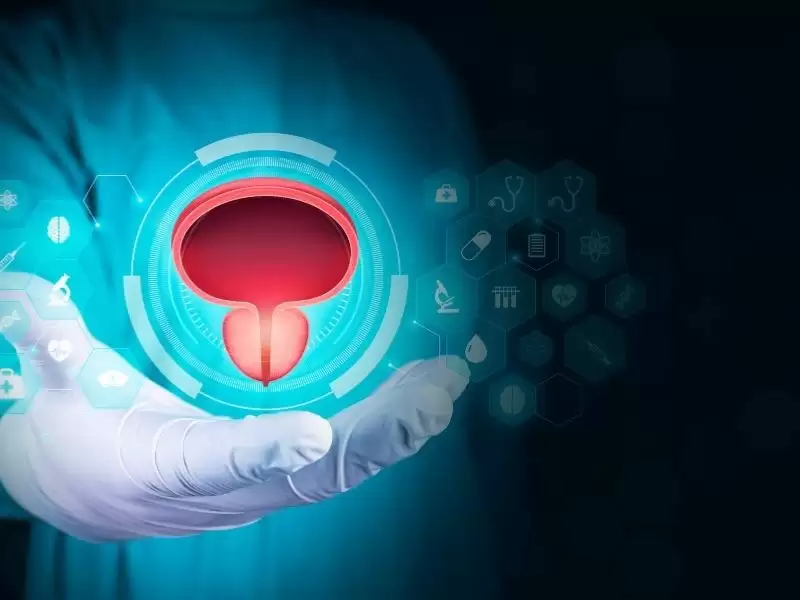
HoLEP and ThuFLEP are closed laser surgical methods used to reduce urinary complaints in benign prostate enlargement.

Prostate cancer is a disease that develops in the prostate gland and is evaluated through PSA testing, examination, biopsy, and imaging meth...
You can quickly search HoLEP, ThuFLEP, prostate fusion biopsy, robotic surgery and other topics.